

Gastric Bypass
Gastric bypass, also known as Roux-en-Y gastric bypass surgery, is one of the most effective weight loss surgery procedures available today. It offers exceptional excess weight loss and provides the average patient with effective obesity-related disease improvement and resolution.1 Owing to these results, many weight-loss surgeons consider the gastric bypass procedure to be the gold standard in bariatric surgery.
Gastric bypass is one of the most commonly performed bariatric procedures in the United States. 2
How it Works:
In the past, gastric bypass surgery was performed as an open procedure, requiring a long single incision in the abdomen. Improvements in surgical techniques now allow the procedure to be performed laparoscopically and robotically, or minimally invasively. Essentially, the surgeon creates 5 tiny incisions in the abdomen through which surgical instruments called trocars are inserted. These trocars act as passageways for the medical devices (scalpel, video camera, etc.) that the surgeons will use to perform surgery. Most gastric bypass procedures will be performed laparoscopically, with or without robotic assistance, unless something about the patient’s surgical profile eliminates that option. Occasionally, the procedure will begin as laparoscopic and be converted to open during surgery.
The procedure works in two ways: restriction and malabsorption. In the first part of the procedure, the surgeon creates a very small stomach pouch, usually about the size of a golf ball, by stapling along the upper portion of the stomach. The new stomach pouch holds about 15 to 30 mL or just a few ounces of food. This means the patient will feel fuller sooner. As a result of the smaller gastric receptacle, the patient will eat less and lose weight.
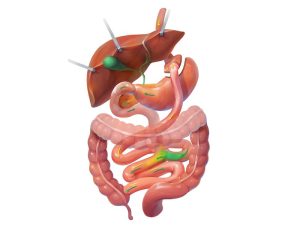
The second part of the procedure involves the rerouting of the small intestine, essentiallyshortening it. In doing so, the intestine that remains offers less surface area for calories to be absorbed through the intestinal walls. This portion of the surgical process allows the patient to lose even more weight as calories are restricted, forcing the body to burn existing calories rather than new ones. It is the combination of the restriction of quantity and the malabsorption of calories that create such exceptional weight loss results. The lower portion of the stomach below the new stomach pouch remains functional, continuing to have a blood supply. The remnant stomach remains in the abdomen; however, it will no longer accept any food.
The gastric bypass procedure often lasts approximately 1 hour. Patients are typically released from the hospital within two days, assuming no complications. Patients should be able to resume normal activity between 2 and 4 weeks after surgery. Individual results may vary.
Advantages of Gastric Bypass
The gastric bypass procedure offers exceptional weight loss potential and has been considered the gold standard in surgical weight loss for decades. It can also improve or resolve many of the most common obesity-related diseases.1
Weight Loss Potential
On average, a gastric bypass patient can expect to lose over 70% of their excess body weight. Particularly successful procedures may yield additional excess body weight loss. Patients may regain approximately 5%-10% of their body weight at some point after their weight has stabilized, but this is nothing to be concerned about. Gastric bypass patients tend to lose more excess body weight than other procedures, with the exception of the Duodenal Switch.
Disease Resolution
The main purpose of bariatric surgery is to reduce or eliminate the diseases associated with obesity. To that end, the gastric bypass procedure works very well, improving or eliminating many of these diseases within days or weeks of surgery:
- Excess Weight Loss: Over 60%1
- Resolution of type-2 diabetes: Over 80%1
- Improvement of High Cholesterol: Over 94%1
Advantages Specific to Gastric Bypass
- Gastric bypass patients enjoy the fastest and greatest weight loss of any bariatric surgery procedure with the exception of the duodenal switch.
- A smaller stomach pouch drastically limits the amount of food that can be eaten at one time, helping with portion control.
- Some fertility issues associated with obesity can be resolved after surgery.3
Risks of Gastric Bypass
While gastric bypass offers exceptional benefits, it also comes with its share of potential risks. The procedure itself is more complex than other bariatric procedures such as the gastric sleeve and can therefore produce additional complications and considerations. However, surgical risk can be minimized by employing an experienced surgeon with demonstrated exceptional surgical outcomes. It is also very important to follow all preoperative recommendations provided by the surgical team.
The following is not intended to be a comprehensive guide to the potential risks of gastric bypass surgery, as every patient will have a different risk profile. However, the more a patient knows about the risks of surgery, the more able they will be to make an informed decision and to avoid them. Patients can speak with their surgeon to learn what they can do to minimize risks.
General Surgical Risks
Any surgical procedure carries some degree of risk. Obese patients, who may be in poorer health, often have a heightened risk for infection and other post-operative complications. Further, obesity-related diseases such as type-2 diabetes may complicate recovery. Other potential surgical risks may include incisional hernias (less common with laparoscopy), swelling in the gastrointestinal system, ulcers, bleeding, stroke, heart attack, deep vein thrombosis or blood clots to the legs, pulmonary embolus or blood clot to the lungs, and rarely, death.
To learn more about the risks of any surgery, patients should speak to their surgeon.
Gastric Bypass Risks and Considerations
- Dumping syndrome, a very uncomfortable but generally not life-threatening condition, may occur as a result of eating high-fat or high-sugar foods after surgery. Patients who drink liquids with meals may make dumping syndrome worse. Symptoms of dumping include vomiting, dizziness, sweating, fainting, and diarrhea.
- The staple line used to seal the new gastric pouch may leak, necessitating a surgical procedure to fix the problem. If a leak does occur there is a high risk of a serious infection.
- The stomach pouch may stretch over time, causing weight gain. This can be corrected with various minimally invasive follow-up procedures.
- Ulcers, gastric reflux, and bloating or gas may occur.
- Parts of the gastrointestinal system may not be easily seen in X-rays after surgery and may obscure ulcers, tumors, or internal bleeding.
- Patients will need to take nutritional supplements for the rest of their lives as the combination of restriction and malabsorption rarely allows a gastric bypass patient to consume enough nutrients through food alone. Nutritional deficiencies can potentially occur without adequate daily supplementation. Patients will also need to supplement their diet with protein.
- Hair loss or thinning may occur. This is generally temporary and secondary to decreased nutritional intake after surgery.
- Gastric bypass patients will need to change their lifestyle through a new diet and exercise program in order to be successful after surgery.
While there seem to be potential risks of surgery, complication rates are historically low, particularly when performed at Centers of Excellence. A 2004 ASMBS consensus statement estimates the complication rates of gastric bypass at about 5% and mortality at .5% when surgery is performed by a skilled bariatric surgeon.4
Ways to Minimize Risk
- Choose a surgeon experienced in the procedure and with exceptional surgical outcomes.
- Stop smoking before surgery.
- Try to lose some weight before surgery.
- Tell the surgeon about all medical problems experienced or currently being experienced.
Gastric Bypass FAQs
Q: Who Is the Ideal Gastric Bypass Patient?
A: The gastric bypass may be suitable for many patients with a BMI of 40 or over, or those with a BMI of 35 or over who have one or more obesity-related diseases. Patients with certain weight-related issues may find that gastric bypass is preferable to other bariatric surgeries. Those with severe or uncontrolled acid reflux or GERD as well as those with severe type-2 diabetes, may be particularly suited to a bypass.
Q: What Results Can I Expect?
A: The gastric bypass has excellent weight loss and obesity-related disease improvement potential. Every patient experience will be different, however on average, patients may lose up to 80% of their excess body weight and improve or resolve a majority of their obesity-related diseases.
Q: Are All Bypasses Performed Laparoscopically?
A: Most gastric bypass surgeries are performed laparoscopically. If, however, the patient has too much scar tissue or fat accumulation in the surgical area, it may have to be performed as an open procedure. There is a small chance that a gastric bypass would need to be converted from laparoscopic to open mid-surgery for patient safety.
Q: How Long Is the Hospital Stay After a Gastric Bypass?
A: A typical, uneventful recovery from a laparoscopic gastric bypass will require a 2-3 night stay in the hospital. An open procedure may require an additional night or two.
Q: Is the Gastric Bypass Reversible?
A: Since no part of the stomach or intestine is removed from the body during surgery, the gastric bypass is technically reversible. However, the procedure to reverse the bypass is not only complicated but risky. There are many reasons why a patient may not be losing as much weight as expected and only a consultation with a qualified bariatric surgeon can start the process to correct it.
Q: Can The Gastric Bypass be Revised?
A: Gastric bypass revisions can be straightforward. The most common bypass revisions include endoscopically shrinking the stomach or tightening the stoma if they have stretched over time. Many revisions can be performed in an outpatient setting.
Q: The Gastric Bypass Seems Complicated. Are There Serious Risks?
A: Much like any surgery, the gastric bypass comes with inherent surgical risks and a few unique to the procedure itself. Thorough pre-operative testing is employed to assess a patient’s risk. Many of the perioperative risks revolve around a patient’s poor general health. With that being said, the risks of the bypass must be compared with the risks of living with obesity. The goal of bariatric surgery and its ultimate suitability is to improve health for a longer, happier life.
Q: Will Patients Ever Be Able to Enjoy Food Again?
A: There is no doubt that the gastric bypass comes with dietary restrictions. Most patients shouldn’t expect to eliminate every indulgence for the rest of their lives. Rather, most successful patients develop healthy eating habits that walk the fine line between taste and calories.
Q: Do Patients Develop a Nutritional Deficiency?
A: Nutritional deficiencies are not common in patients who follow their post-surgical plan delineated by their bariatric practice. While the risk of deficiency is higher than in the gastric sleeve, eating a balanced diet, taking supplements as prescribed, and attending all post-op visits should keep nutritional problems at bay.
Q: Diabetes Can Go Into Remission Within Weeks of a Gastric Bypass. Does That Mean Patients Can Consume Sugar Any Time They Want?
A: Some patients with Type 2 Diabetes go into remission very early on after surgery and before they lose a significant amount of weight. Recent research has shed light on why. It has been postulated that gut bacteria in the body may rebalance themselves after a bypass, offering better insulin regulation. This is not a free pass, however. Consuming too much sugar will eventually lead to weight regain and a possible return to the diabetic condition. Further, consuming too much sugar can lead to dumping syndrome, a very uncomfortable condition caused by the rapid emptying of stomach contents into the small intestine.
Q: Is It True That Patients Can’t Drink Soda?
A: Soda, especially for bypass patients, is a no-no. Not only do most sodas contain sugar or sugar substitutes that don’t offer any nutritional value, but the carbonation itself can be very uncomfortable and, over time, stretch the stomach pouch, causing weight regain.
References:
- Buchwald H, Estok R, Fahrbach K, et al. Weight and type 2 diabetes after bariatric surgery: systematic review and meta-analysis. Am J Med. 2009;122(3):248-256.
- American Society for Metabolic and Bariatric Surgery. Surgery for morbid obesity: what patients should know. Toronto: FD-Communications, Inc., 2007.
- Eid GM, Cottam DR, Velcu LM, et al. Effective treatment of polycystic ovarian syndrome with roux-en-Y gastric bypass. Surg Obes Related Dis. 2005;2:77-80.
- Buchwald H. 2004 ASBS consensus conference statement, bariatric surgery for morbid obesity: health implications for patients, health professionals, and third party payers. Surg Obes Related Dis. 2005;1:371-378.
This page was reviewed by